

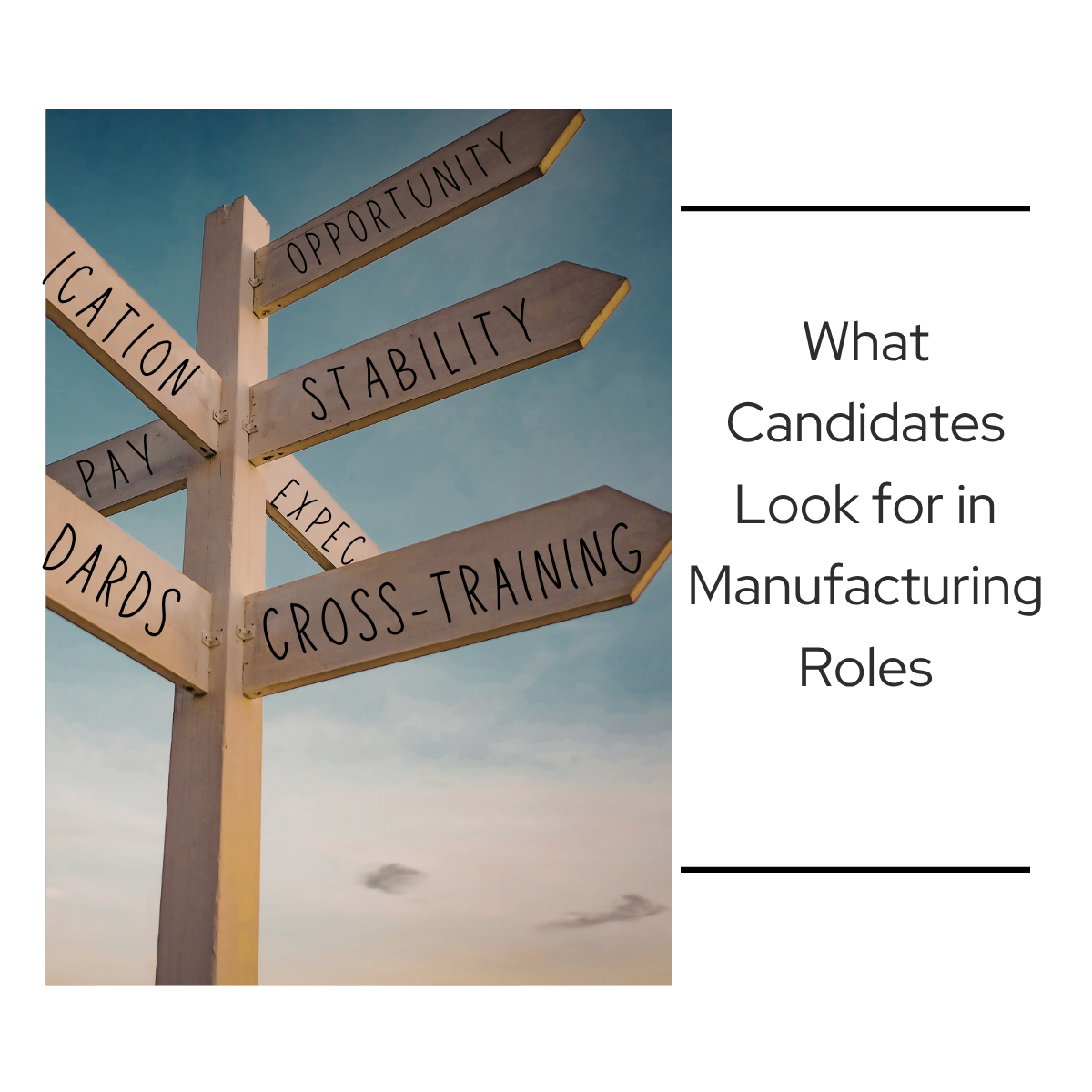
Most hiring conversations in light industrial environments are framed around what employers need: attendance, reliability, the ability to meet production targets. That framing isn’t wrong. But it’s only half the conversation.
The candidates you most want to hire, the ones who show up, stay, and perform, are evaluating you too. And if your operation isn’t giving them a reason to choose you, they’ll find one somewhere else.
Understanding what candidates actually look for in manufacturing, warehousing, and distribution roles isn’t just useful for recruiting. It’s useful for retention. The same things that attract a strong candidate are often the same things that keep them.
Stability Matters More Than Most Employers Realize
Candidates in light industrial markets are not naive about the nature of the work. Shift schedules, physical demands, and varying conditions come with the territory. What they’re looking for underneath all of that is stability: a consistent schedule, predictable hours, and a sense that the role will still be there in three months.
Operations with frequent schedule changes, unpredictable overtime, or unclear communication signal instability, even when the role itself is technically steady. A candidate who has been burned by that kind of environment before will weigh it heavily.
A staffing partner who communicates clearly with workers before day one, sets expectations honestly, and stays engaged through the assignment contributes directly to that sense of stability. Candidates notice when the agency behind their placement is responsive and organized. It reflects on your operation too.
Clear Expectations Before Day One
One of the most consistent reasons candidates disengage early is a gap between what was described and what the job actually is. That gap erodes trust fast.
Candidates want to know what they’re walking into: physical demands, production targets, pace of work, what a typical shift looks like. Vague postings and over-promising during interviews might fill a role faster. They also produce the turnover that restarts the whole process.
This is an area where the right staffing partner adds real value. When a partner knows your facility, your pace, and your expectations well enough to communicate them accurately to candidates before the first shift, you get workers who arrive prepared instead of surprised. That preparation shows up in early performance and early retention.
A Respectful Process Signals a Respectful Workplace
Candidates pay attention to how they’re treated during the hiring process. Long delays with no communication, disorganized screening, or an application experience that feels dismissive all send a message about what it’s like to work there.
A staffing partner manages much of that first impression on your behalf. How candidates are screened, communicated with, and prepared before they ever set foot on your floor reflects directly on your operation. If your agency isn’t treating that responsibility seriously, the candidates who arrive are already starting with a poor experience, and you’re carrying the cost of it.
Growth and Skill Development
Candidates considering temp-to-hire or longer-term roles want to know if there’s a path forward. That doesn’t mean every worker is angling for management. It means they want to know the work can lead somewhere, whether through cross-training, additional certifications, or a clear route to a full-time position.
Operations that communicate those pathways, and staffing partners who reinforce them during placement conversations, tend to attract candidates who are thinking longer-term. Those are often the same candidates you most want on your floor.
What This Means for How You Hire
Competing for reliable workers in light industrial environments isn’t just about pay. It’s about how your operation presents itself, and whether the partner placing workers on your floor is reinforcing or undermining that presentation.
If candidates are arriving unprepared, disengaged, or already skeptical, it’s worth asking where in the process that’s happening. Sometimes the answer is internal. Often, it starts before they ever show up.
Get in touch if you want to talk through what a better hiring experience looks like for your operation.