

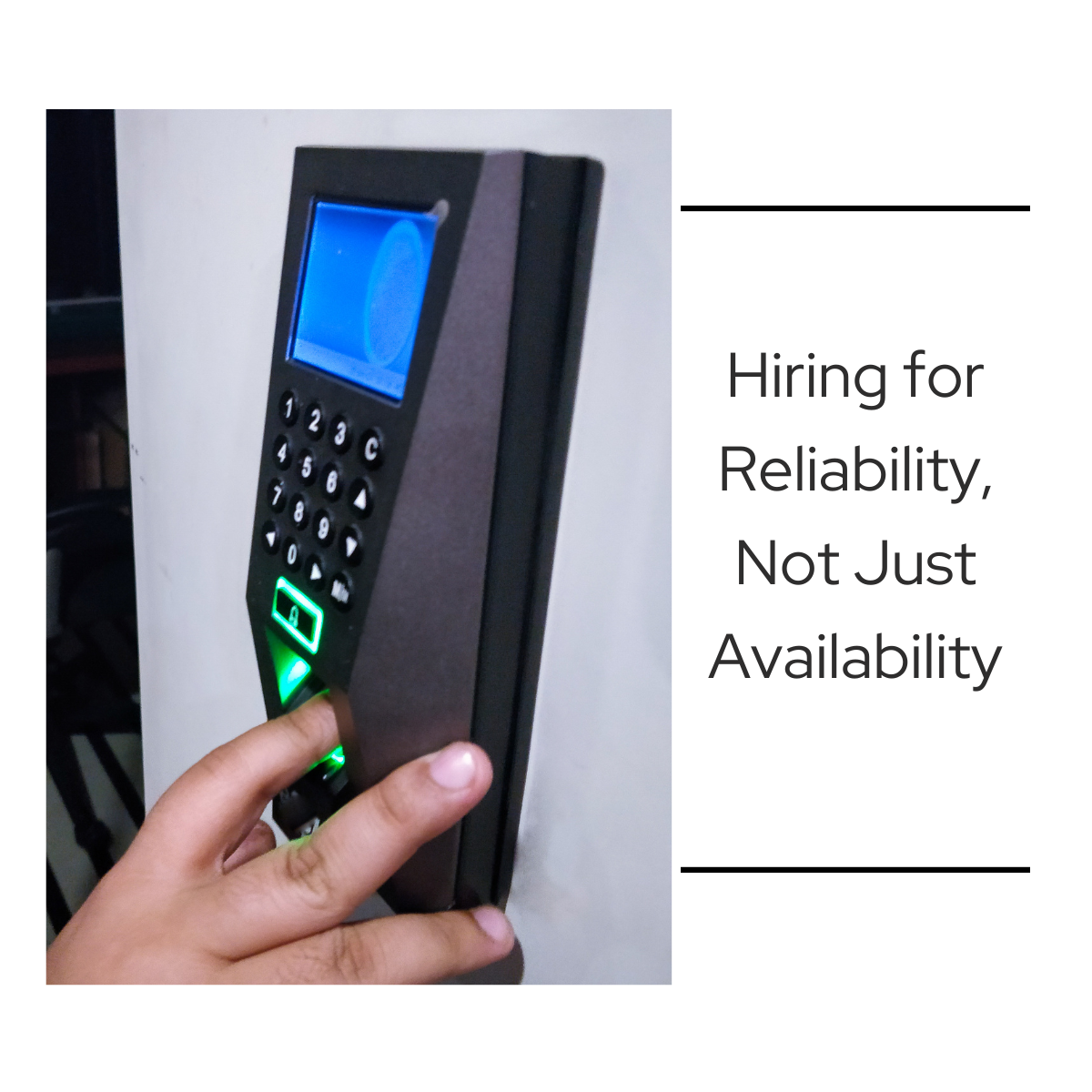
When a position opens up in a manufacturing, warehousing, or distribution environment, the pressure to fill it is immediate. Production doesn’t pause. Supervisors start absorbing the gap. Other workers feel it. The instinct is to move fast and get someone in the door.
That instinct makes sense. It also leads to some of the most expensive hires you’ll ever make.
The problem isn’t speed. The problem is what gets prioritized when you’re moving fast. In most cases, the filter becomes availability: who can start Monday, who’s in the area, who passed the background check. Reliability, the quality that actually determines whether that hire works out, rarely gets the same weight.
Availability and Reliability Are Not the Same Thing
A candidate who’s available immediately isn’t necessarily reliable. Available means they don’t have a job right now. Reliable means they show up consistently, meet expectations, and stay long enough to be worth the investment.
In light industrial work, that distinction matters more than almost anywhere else. Attendance issues on a production floor don’t stay contained. A single no-call no-show can leave a line short-staffed, force schedule changes, and put pressure on supervisors who already have too much on their plate. High turnover compounds the problem. Every replacement cycle costs time, money, and floor stability.
Hiring for availability gets roles filled. Hiring for reliability keeps them filled.
What Reliability Screening Actually Looks Like
Shifting toward reliability doesn’t mean slowing the process down. It means asking different questions and using different filters.
Work history patterns are one of the clearest indicators. A candidate who has held multiple short-term positions isn’t automatically a bad fit, but it warrants a conversation. Are the short stints connected to seasonal work, layoffs, or something else? What they tell you matters less than whether the pattern has an explanation.
Attendance history, where you can access it, is more predictive than most hiring managers give it credit for. So is how a candidate talks about past roles. Someone who describes every previous employer negatively may have had bad experiences, or may be someone who struggles with accountability. You won’t always know, but the pattern is worth noting.
References matter, but only if you’re asking the right questions. “Would you rehire this person?” and “How was their attendance?” will tell you more than a general character reference.
The Role Your Staffing Partner Plays
If you’re filling light industrial roles through a staffing partner, the reliability screening happens, or doesn’t happen, before a worker ever sets foot on your floor. That’s either an advantage or a liability depending on who you’re working with.
A staffing partner that screens only for availability is essentially doing a fast filter on who’s in their database and can start this week. That’s not hiring. That’s a warm body operation, and it shows up in your turnover numbers.
A partner with actual reliability standards is asking the questions above before the recommendation is made. They’re looking at history, checking references, and presenting candidates based on fit, not just availability. When a worker shows up Monday morning, there’s already a reason to believe they’ll be there Friday too.
If your current partner can’t explain how they screen for reliability, that’s worth paying attention to.
Building Reliability Into Your Own Process
Even if you’re not using a staffing partner, or especially if you’re not, the same principles apply. Define what reliability means for your specific roles before you post them. Attendance expectations, schedule requirements, and performance standards should be communicated before an offer is made, not after.
Candidates who aren’t a fit will often self-select out when expectations are clear from the start. That’s not a loss. That’s the screening process working the way it should.
Availability fills a role. Reliability fills it for good.
If your operation keeps cycling through the same positions, the issue probably isn’t the candidate pool. It’s what you’re filtering for. A hiring process built around reliability takes a little more intention upfront, but the cost of not doing it shows up every time you’re back at square one.
Get in touch if you want to talk through how better screening standards can reduce the churn your team is dealing with.