

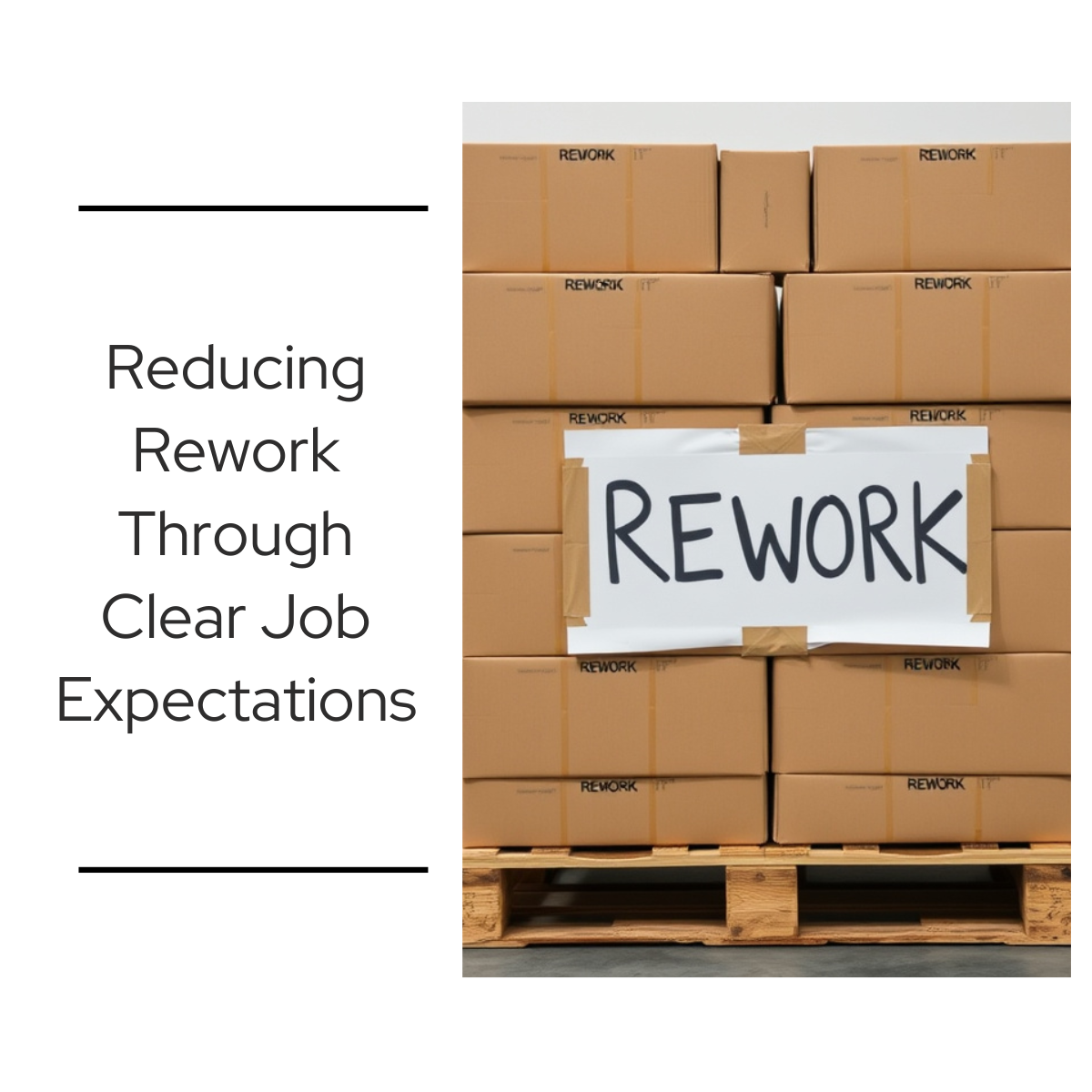
Rework does not show up as a line item on most budgets. It shows up as extra time on a shift, scrapped materials, late orders, and supervisors spending their day fixing problems instead of running production. By the time it is visible, it has already cost more than most operations realize.
The cause is rarely laziness or carelessness. More often, it comes down to workers who did not have a clear picture of what good looked like before they started doing the work.
What Rework Actually Costs
The direct costs are straightforward: scrapped materials, wasted labor hours, delayed shipments. The indirect costs are larger and harder to track.
When a worker has to redo a task, someone else has to catch it first. A supervisor, a quality checker, or a downstream coworker absorbs time they did not have. Throughput slows, schedules slip, and if the error reaches a customer, the cost goes up by an order of magnitude. In high-volume environments, even a small error rate compounds fast and touches labor, materials, delivery, and reputation.
Where Unclear Expectations Create Problems
Most rework traces back to a communication gap that opens early. A worker who receives vague instructions fills in the blanks with their best guess. In precision-dependent environments, close enough is not good enough.
Common gaps include quality standards that are described but not demonstrated, output targets mentioned once and never reinforced, inspection checkpoints workers do not know exist, and handoff procedures that vary by shift. None of these are failures of effort. They are failures of clarity, and they are fixable.
Where a Staffing Partner Enters the Picture
A staffing partner is often the first point of contact a worker has with your operation, which makes them one of the most important levers for reducing rework before it starts.
A partner who takes their job seriously asks the right questions upfront: What does this role actually require? What are the most common mistakes new workers make? What quality standards are non-negotiable? Those answers shape how candidates are screened and how prepared they are before placement. When that intake process is done well, workers arrive with a realistic understanding of the role and the expectations they will be held to. When it is skipped, your supervisors spend the first two weeks filling in the gaps.
Ask your current staffing partner directly: What do you tell a worker about this role before they start? If the answer is vague, that is a gap in your process, not just theirs. A good partner will also push back on vague job descriptions and flag mismatches before sourcing candidates. A partner who simply accepts whatever they are handed and fills the order is passing the problem downstream.
Setting Expectations That Actually Stick
Expectations stick when they are specific, demonstrated, and reinforced consistently.
Specific means measurable: not “pack carefully” but “no more than two units per layer, seams facing inward, box weight not to exceed 40 pounds.” Demonstrated means shown, not just described. A worker who observes a task performed correctly and then performs it under observation before working independently is far less likely to develop habits that lead to rework. Reinforced means revisited: shift huddles, visual standards at workstations, and consistent supervisor feedback keep the standard visible over time.
Consistency Across Shifts
In multi-shift operations, inconsistency in how expectations are communicated is one of the most common rework drivers. When one supervisor enforces a standard and another lets things slide, workers adapt to the lower bar.
Documented standards fix this. When expectations exist in writing and are referenced regularly, they belong to the operation, not to whoever is on the floor that day. A staffing partner with strong account management will also help, flagging when worker performance varies across shifts and helping identify whether the root cause is a placement issue or a process issue.
If rework is a recurring problem in your operation, the fix probably starts earlier in the process than you think. Get in touch to talk about how building clarity into your workforce processes, from job requirements to placement to onboarding, can reduce rework and keep your operation running the way it should.