

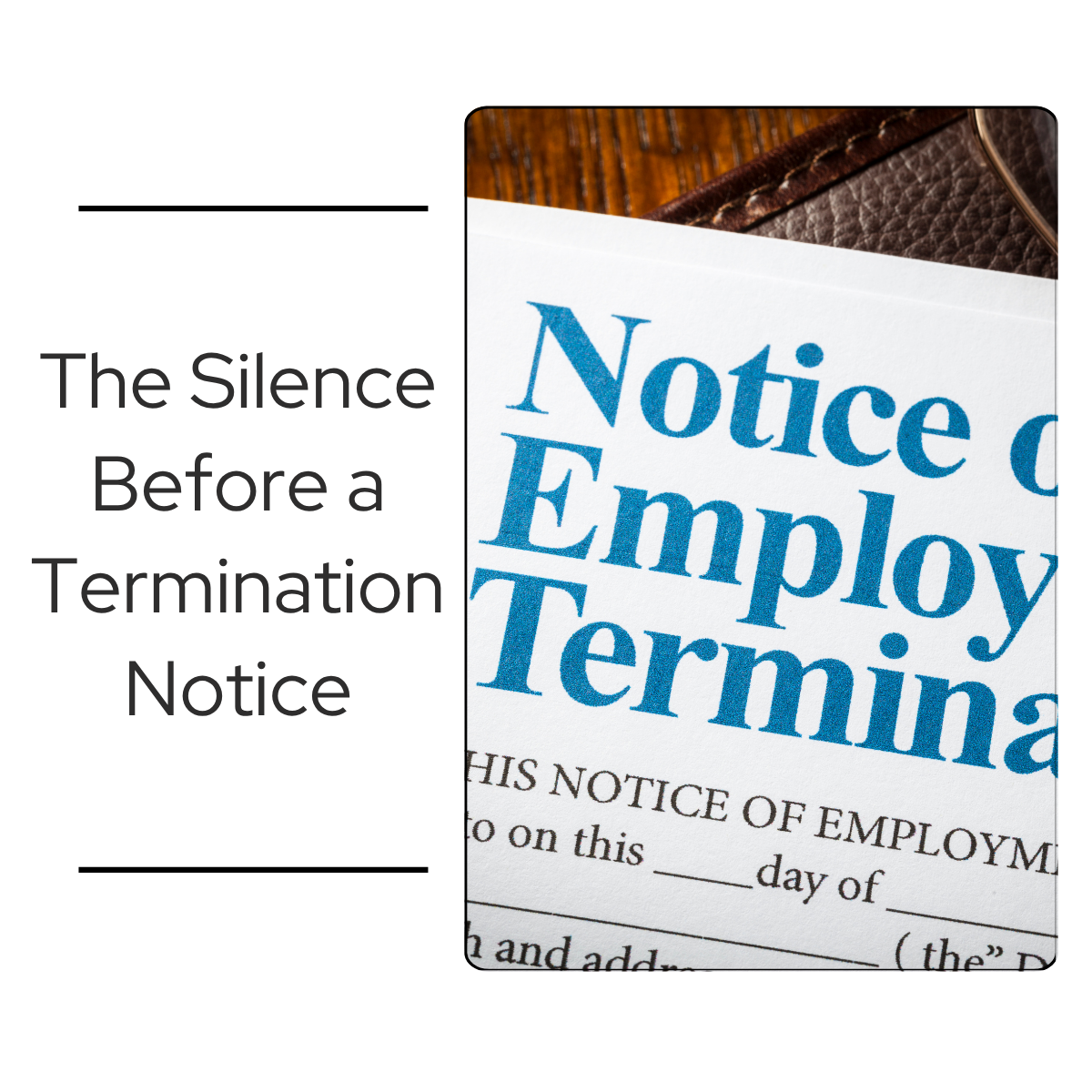
You decide it is time to end the assignment. Attendance, attitude, quality, something finally hit a breaking point. But if you trace it back, this might be the first time anyone outside your building heard there was a problem at all.
This happens more than most leaders would like to admit, and it usually means the performance feedback loop broke down long before anyone noticed. Not because clients are trying to hide anything. Usually it is the opposite. The issue felt small at first, and by the time it was worth mentioning, it was already worth ending.
The Notice That Comes Too Late
Think about what happened in the weeks before that notice. Someone showed up late a few times. Missed a step on the line. Had an attitude that rubbed a supervisor the wrong way. None of it got written down or passed along. It just got absorbed until someone decided enough was enough.
By the time the decision reaches termination, no one got a chance to fix it. Not the employee. Not the team that worked around the problem. Not whoever placed that worker and could have stepped in weeks earlier.
What a Broken Performance Feedback Loop Costs You
A performance feedback loop only works if it actually loops. Something happens, it gets flagged, someone acts on it. When that chain breaks at the first step, every downstream fix disappears with it, including coaching, reassignment, or even a simple conversation.
This is not only a temp workforce problem. The same silence happens with full-time employees. A supervisor notices something is off, decides it is not worth the conversation yet, and keeps deciding that until it becomes a much bigger conversation. A decision with no history behind it is also a harder decision to stand behind later, which is one more reason the paper trail matters as much as the outcome.
Small Signals Are Easier to Fix Than Big Problems
Early feedback is almost always low stakes. A quick note that someone was late twice this week. A heads up that quality slipped on a shift. None of it requires a formal process or an uncomfortable meeting. It requires someone deciding the small thing is worth mentioning before it becomes the only thing worth mentioning.
That is the real shift. Not more paperwork, not a new system. Just closing the gap between noticing something and saying something.
What a Working Performance Feedback Loop Buys You
A performance feedback loop that runs continuously, instead of only at the breaking point, gives everyone a chance to course correct while correction is still possible. A supervisor gets room to coach instead of replace. A staffing partner gets room to retrain, reassign, or address a problem before it becomes irreversible.
None of that is possible after the fact. It is only possible while the problem is still small enough to talk about.
Contact us to talk through how performance feedback flows between your team and the partners supplying your workforce, and where that loop might be breaking down without you noticing.
Edited with AI assistance