
The Overtime Wall
Somewhere around week five or six of peak, a lot of floors hit the same spot. The extra Saturdays that felt manageable in September start showing up as call-offs and slower lines. Mandatory overtime is often the fastest lever when volume spikes. Used all season, it starts to backfire. What Mandatory Overtime Costs You If […]
The Career Path Nobody Sees

October is Manufacturing Month, when manufacturers open their doors to show people what a career in the industry can look like. It is a good time to ask whether your own workers can see that career. Start with a simple test. Ask a temp in a general labor role what it takes to move up, […]
The Promotion Trap

A temp-to-hire worker converts to a permanent role after proving reliable, skilled, and easy to work with. A year later, that same person is running a shift with five direct reports, chosen because they were the best operator on the floor, not because anyone evaluated their leadership readiness. Conversion Signals Do Not Measure Leadership Readiness […]
Onboarding Speed as a Peak Season Lever

Bringing on extra workers ahead of a seasonal surge solves one problem and creates another. The plant has enough hands on the floor, and none of those hands know the equipment, the safety protocols, or where anything is yet. Onboarding speed decides how many weeks it takes for that headcount to turn into real output. […]
Managing Seasonal Ramp-Up Without Overtime Burnout
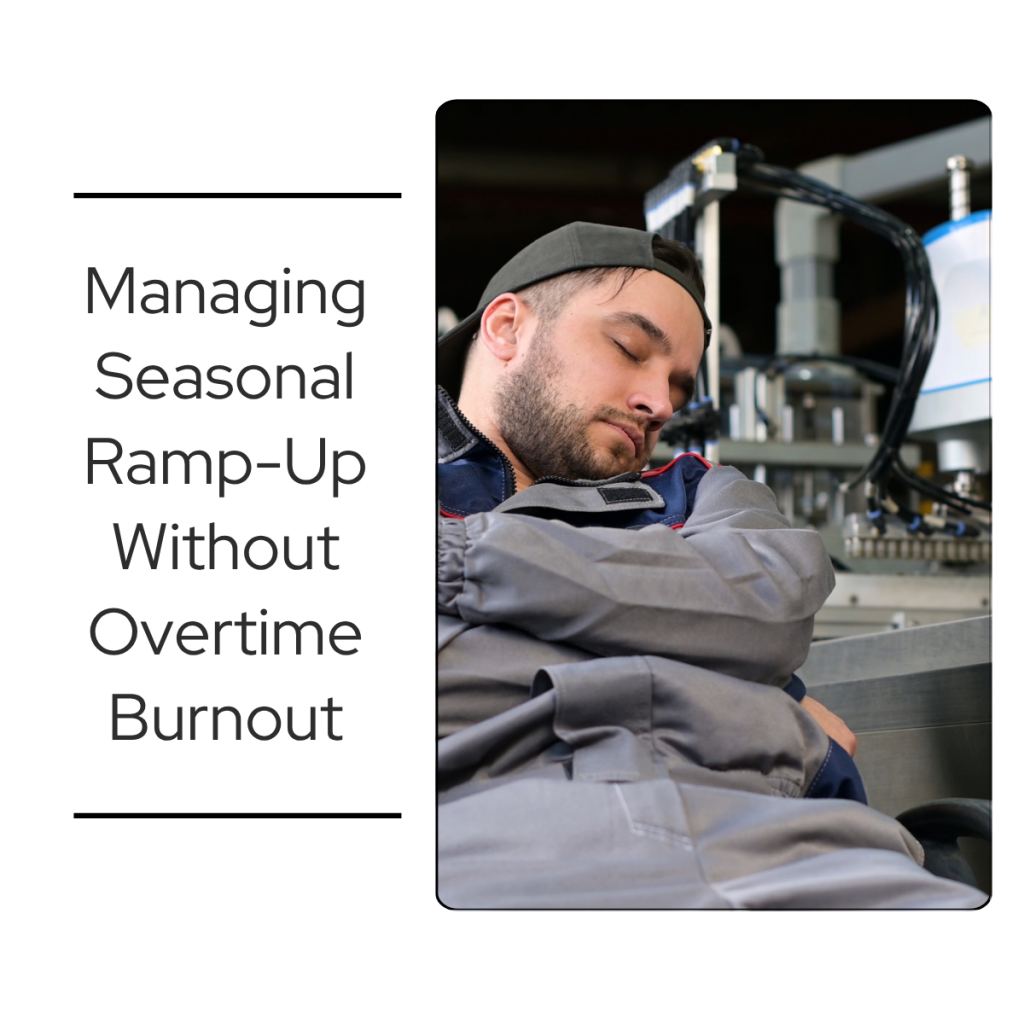
Peak season adds volume fast, and the first move in most plants is the same: add hours to the current team. Overtime does not require new hiring or new onboarding, which makes it the easiest lever to reach for. It is also the one with the shortest runway. What Extended Hours Actually Cost The U.S. […]
Peak Season Workforce Planning Starts Now

Manufacturers know the fourth quarter does not wait for anyone. Retail replenishment, holiday production runs, and year end order surges arrive on a fixed calendar, whether a facility is staffed for them or not. Peak season workforce planning has to start well before volume actually climbs, because the lead time for finding, vetting, and training […]
Is Your Staffing Partner Tracking Attendance?
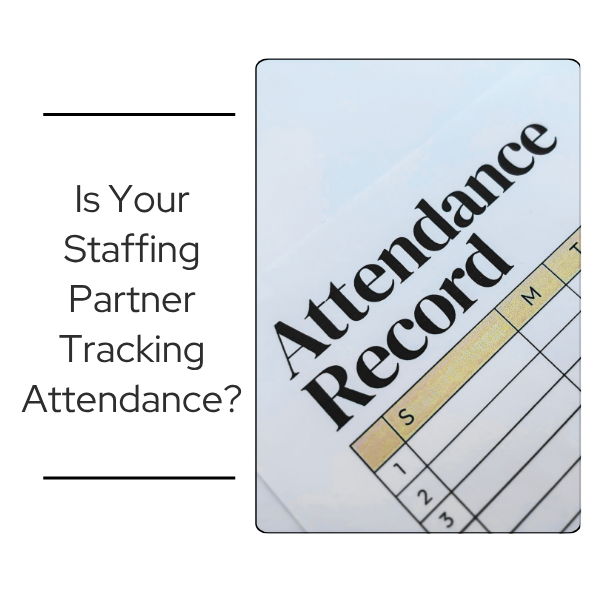
A no-show on a production line costs more than one shift. It costs the supervisor reworking the schedule, the coworkers absorbing the extra load, and the output target that quietly slips. By the time a pattern is noticed, it has usually already cost more than one bad day. The data to catch that pattern earlier […]
Correcting Temporary Workers: Who to Call and When

A supervisor catches a temporary worker doing something wrong: a step skipped, a process shortcut, a safety procedure ignored. In the moment, the supervisor corrects it, and most of the time that is the end of it. But sometimes the same issue keeps showing up, and the question becomes whether this is still something to […]
Temporary Worker Communication: Closing the Gaps
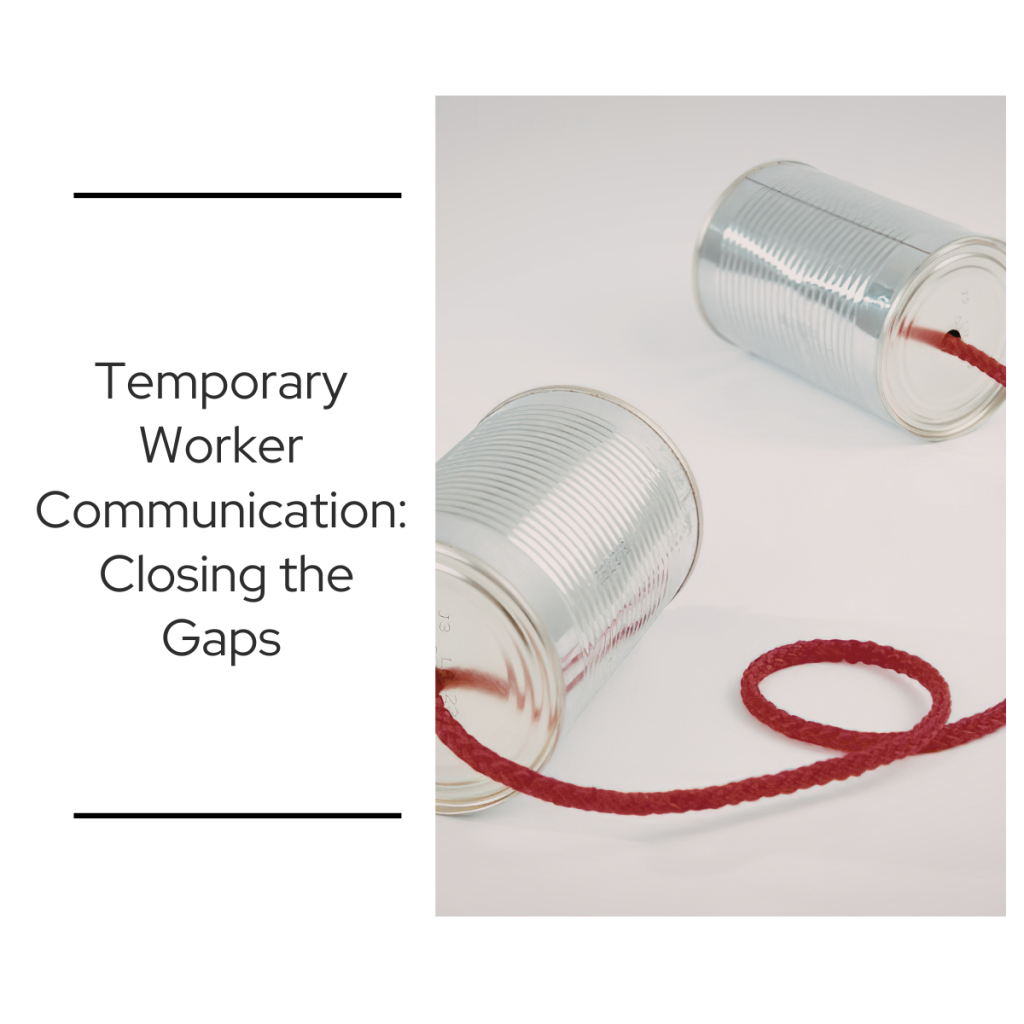
Temporary worker communication is where a lot of production problems quietly begin. A machine operator misunderstands a safety procedure, or a picker gets conflicting directions from two supervisors, and the cost shows up fast: rework, missed quotas, sometimes an injury. Temporary workers face this risk more than most. They are new to the facility, unfamiliar […]
How Safety Performance Reveals the Quality of Your Staffing Partner

National Safety Month is a good time to ask a harder question: is your staffing partner holding up their end of the safety equation? Many operations leaders treat safety as something that lives entirely inside their own walls. Supervisors run toolbox talks. The facility tracks incident rates. But a meaningful share of safety outcomes for […]